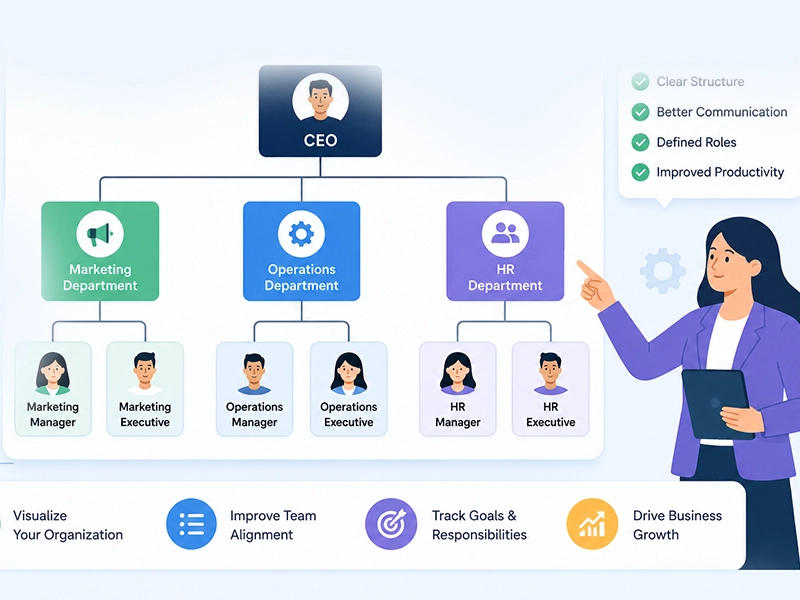
Growing organizations need clear roles and reporting lines. Employees should understand their responsibilities, managers, and place in the wider workflow.
An organogram, also called an organizational chart, makes that structure visible. Hidesc connects it with task management, workflow automation, projects, and collaboration.
The same structure can support role-based permissions, team communication, OKR alignment, performance dashboards, and approval workflows.
What Is an Organogram?
An organogram is a visual representation of a company's internal structure. It shows employees, departments, reporting relationships, and management hierarchies so everyone can understand how the organization works.
You can create an online organizational chart with the Hidesc organogram maker and then connect that structure to real execution through tasks, workflows, approvals, team chat, and performance tracking.
Why Organograms Matter More Than Ever
As an organization grows, its structure becomes harder to understand. An organogram can make several important relationships clear:
- Employees understand who they report to.
- Departments and leadership hierarchies become visible.
- Escalation paths and decision ownership become clearer.
- Managers can assign work to the right people.
Key Benefits of an Organogram
Improved Organizational Visibility
Employees instantly understand reporting lines, team structures, and department ownership.
Better Communication
Clear reporting relationships help employees connect with the right stakeholders faster. For communication tied to work, explore Hidesc Team Chat.
Defined Roles and Responsibilities
Every team member understands their role, objectives, and contribution to business outcomes.
Stronger Task Management
When responsibilities are mapped clearly, task assignment, deadline tracking, and accountability improve.
Types of Organograms
1. Hierarchical Organogram
The most common structure, where authority flows from leadership to department heads, managers, team leaders, and employees.
Best for: Enterprises, government organizations, and traditional businesses.
2. Flat Organizational Structure
A flat structure reduces management layers and gives employees more autonomy.
Best for: Startups, small businesses, and agile teams.
3. Matrix Organogram
Employees may report to more than one manager, such as a functional manager and a project manager.
Best for: IT companies, consulting firms, agencies, and multi-project teams.
4. Functional Organogram
Employees are grouped by specialization such as marketing, finance, HR, operations, or customer support.
Best for: Organizations built around specialist departments.
How to Create an Organogram Online
Step 1: List Employees
Document leadership positions, departments, teams, and individual contributors.
Step 2: Define Reporting Relationships
Clarify who reports to whom so accountability is visible.
Step 3: Group Teams
Organize employees by function, project, department, location, or business unit.
Step 4: Build the Organizational Chart
Use the free organogram maker to visualize structure and make it easier for teams to understand reporting lines.
Step 5: Update Regularly
Update charts whenever employees join, teams expand, roles change, or leadership structures shift.
How Organograms Improve Task Management
Organizational structure affects how work gets done. Visible responsibilities help tasks reach the right people. They also make ownership, progress, and bottlenecks easier to review.
For teams that want to connect reporting structure with execution, Hidesc brings together task management software, approval workflows, and analytics dashboards.
Why Businesses Need More Than an Organogram
Traditional charts show who is responsible, but they do not show:
- Which tasks are active
- Which deadlines are approaching
- Who has too much work
- Which workflows are delayed
- How goals are progressing
That is why modern teams need an integrated work platform. Hidesc helps businesses connect organograms with OKR management, collaboration, workflow automation, task ownership, and project tracking.
Frequently Asked Questions
What is an organogram?
An organogram is a visual diagram that displays an organization's structure, reporting relationships, teams, and departments.
What is the purpose of an organizational chart?
It helps define roles, improve communication, clarify reporting lines, and support better decision-making.
How can I create an organizational chart online?
You can use Hidesc to create organizational charts digitally and manage team structure more efficiently.
Is an organogram useful for small businesses?
Yes. It improves accountability, coordination, onboarding, and scalability.
Is Hidesc only an organogram maker?
No. Hidesc combines organogram creation, task management, workflow automation, team collaboration, goal tracking, and project management in one platform.
Connect Your Organogram to Everyday Work
Building the chart is only the first step. Use the Hidesc Organogram Maker to map the structure. Then connect teams, tasks, workflows, and goals in one workspace.