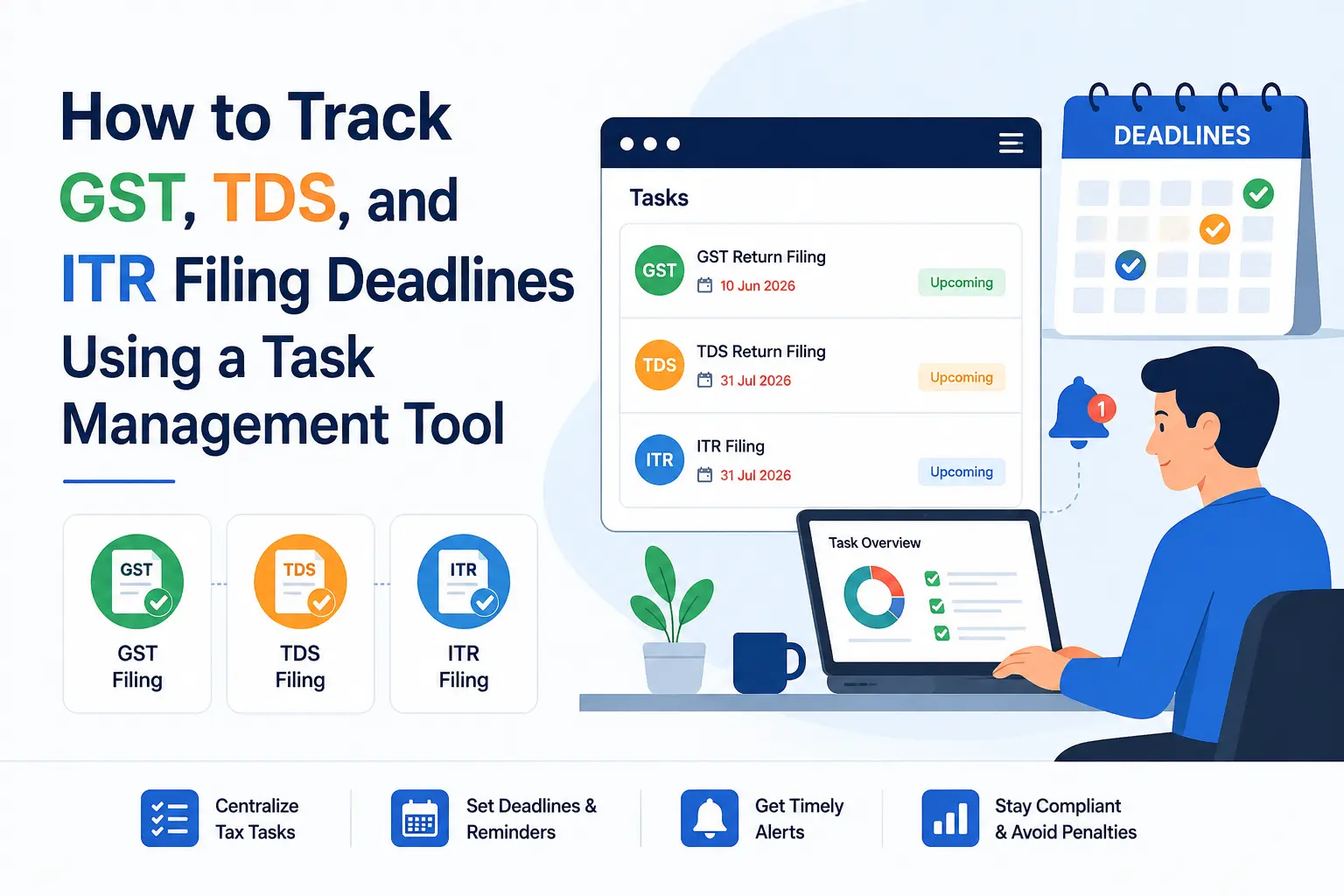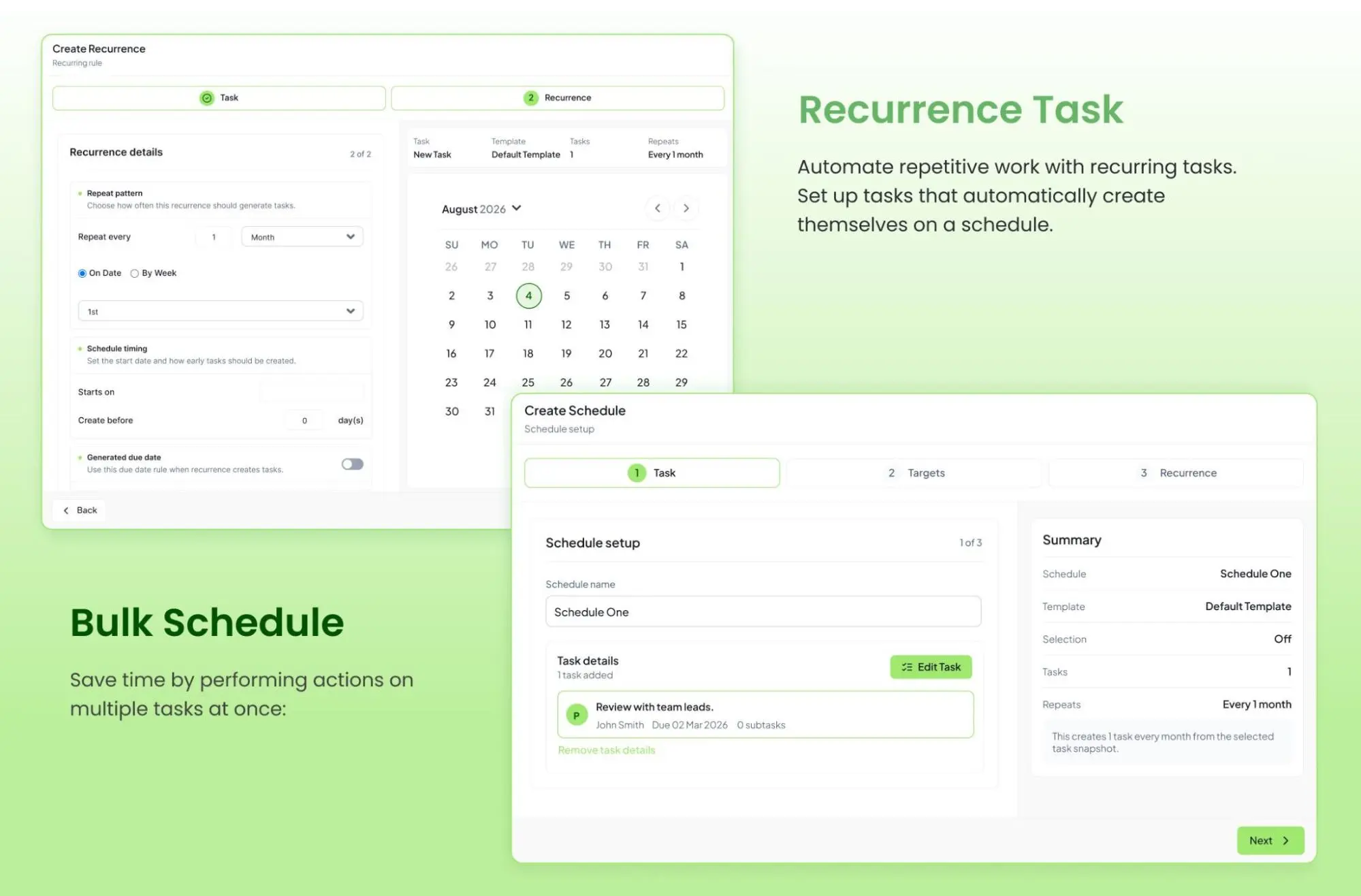
Simple recurrence scheduler vs matrix recurrence scheduler: the short answer
A simple recurrence scheduler repeats one task template according to a rule, while a matrix recurrence scheduler generates recurring tasks in bulk across combinations of clients, projects, teams, departments, or services. Use simple recurrence for individual repeating work. Use matrix recurrence when the schedule must coordinate many resources at once.
Why recurrence scheduling is not always simple
Recurrence scheduling is normally considered a simple task management and workflow automation function that allows a task to recur every X days. However, recurrence is often more complex in actual business operations. One client may require a task after two days, another may require it after ten days, while a project team may need bulk scheduling for several resources.
This is where two methods emerge: simple recurrence scheduling and matrix recurrence scheduling. Both solve recurring-task requirements, but they are designed for different purposes.
What is a simple recurrence scheduler?
A simple recurrence scheduler defines recurrence within one task template. Instead of creating a different workflow for every client or particular case, you create one reusable task template and apply the recurrence rules to it.
Imagine that you have a "Client Follow-up" task template. Some clients need follow-up every two days, while another client requires it every ten days. With a simple recurrence scheduler, you can reuse the same task template, but the due date and repeat rule can differ for each client or case. A shared calendar and Kanban view can then make those different due dates easier to monitor.
A simple scheduler also prevents unnecessary templates when the change is small and does not require additional actions. One more point should be considered: in a simple scheduler, you first create the task and then start the recurrence.
Benefits of simple recurrence scheduling
- Easy to configure for individual tasks.
- Reduces duplication of task templates.
- Supports client-specific due dates and reminders.
- Makes recurring work easier to manage for small and growing teams.
- Works well when the recurrence logic is straightforward.
- Avoids unnecessary templates for simple changes.
- Suitable when a task must exist before recurrence begins.
This model is ideal when the task itself is the unit of scheduling. You are not trying to coordinate many resources at once; you are simply making one task repeat according to a rule.
What is a matrix recurrence scheduler?
A matrix recurrence scheduler, also called a bulk recurrence scheduler, is an advanced scheduling framework designed for mass resource planning. Unlike the ordinary method, where recurrence is scheduled inside a particular task, a matrix recurrence scheduler produces tasks across several dimensions, such as projects, clients, teams, departments, or services. This approach is useful for PMOs coordinating work across projects and resources.
Matrix recurrence schedulers are useful when the same operational rule must apply to several resources. For example, project onboarding may require tasks for multiple clients, with recurrence rules that vary by project type, service category, or client tier. Teams planning repeatable onboarding can also connect these schedules to a structured employee onboarding workflow.
In a matrix recurrence scheduler, the schedule is designed first. It then produces tasks automatically from the matrix that has been created.
Example of matrix recurrence
Imagine a company managing accounting work for multiple clients:
- Monthly GST filing tasks for all clients.
- Weekly internal review tasks for premium clients.
- Quarterly compliance tasks for selected project groups.
A matrix recurrence scheduler can generate the correct recurring tasks in bulk by mapping rules across different entities. It is especially useful when scheduling must be driven by a combination of factors rather than by a single task template.
Benefits of matrix recurrence scheduling
- Handles bulk task generation efficiently.
- Supports multi-dimensional scheduling across clients, projects, and teams.
- Reduces manual setup for large operations.
- Better suited to enterprise workflows and structured service delivery.
- Allows scheduling rules to scale as the business grows.
- Automatically creates tasks from the designed schedule.
Key differences between simple and matrix recurrence schedulers
| Aspect | Simple recurrence scheduler | Matrix recurrence scheduler |
|---|---|---|
| Scope | Single task template | Multiple resources or entities |
| Setup | Easy and direct | More structured and advanced |
| Best for | Individual recurring tasks | Bulk scheduling across projects or clients |
| Flexibility | Client-specific due dates | Rule-based recurrence across combinations |
| Complexity | Low | Medium to high |
When to use each recurrence scheduler
Use a simple recurrence scheduler when the workflow focuses on a single task and requires flexible deadlines or recurrence periods. It is recommended for client follow-ups, reminders, reviews, and light business processes.
A matrix recurrence scheduler is more appropriate when many items recur across several dimensions. It is suitable for projects, accounting processes, services, and other bulk operations. For teams already coordinating overlapping client or project work, the principles in multi-project management also help clarify capacity and ownership.
Product design insight
If you develop applications for task management or accounting, both kinds of scheduler can be implemented together. Hidesc uses both a simple recurrence scheduler and a matrix scheduler, allowing users to manage individual recurring tasks and bulk scheduling operations.
A good product-design strategy hides the complexity of the matrix behind a user-friendly interface. The user defines:
- Resource type: client or project.
- Recurrence rule: daily, weekly, monthly, or custom.
- Offset: two days, ten days, or thirty days.
- Task template: review, approval, filing, or follow-up.
This provides flexibility without overwhelming users.
Frequently asked questions
Can the same task template use different recurrence rules?
Yes. A simple recurrence scheduler can reuse one task template while assigning different due dates and repeat rules to individual clients or cases.
Does a simple recurrence scheduler create the task or the schedule first?
The task is created first. Recurrence is then applied to that existing task or task template.
How does a matrix recurrence scheduler create tasks?
The schedule matrix is designed first. The scheduler then generates tasks automatically across the selected resources and recurrence combinations.
Which recurrence scheduler is better for accounting workflows?
Use simple recurrence for an individual client task with its own deadline. Use matrix recurrence for bulk GST, review, compliance, or service tasks across many clients and project groups.
Final thoughts
Use the simple recurrence scheduler when you need one task template to recur with variable deadlines. Use a matrix recurrence scheduler when recurring work must be allocated to multiple clients or projects in bulk.
In practice, both are equally important. The former improves user friendliness, while the latter improves scalability. Modern business software can combine both approaches into one useful scheduling tool.